A New Conversation at the Threshold: How Clinicians Are Changing the Way Dementia Diagnoses Are Delivered
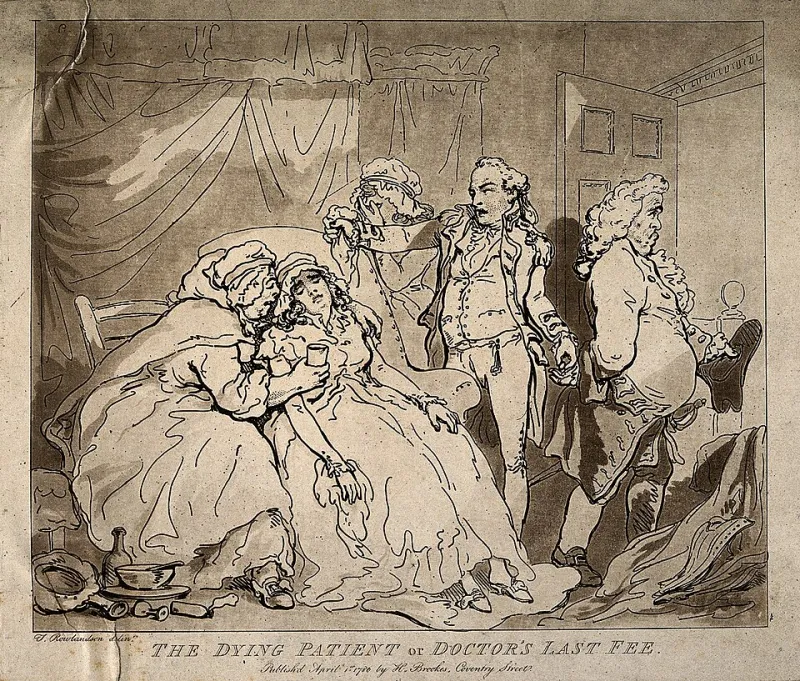
Photo: Unknown, CC BY 4.0, via Wikimedia Commons
For much of modern medical history, the delivery of a dementia diagnosis followed a recognizable script. A physician, often a neurologist or geriatrician, would review test results with a patient and their family, deliver the diagnosis in direct terms, outline what to expect, and provide a referral or two. The appointment would end. The family would leave the office carrying a weight that had been named but not yet understood.
This model—efficient, unambiguous, and largely impersonal—was not designed to cause harm. It was designed to be honest. But a growing body of evidence and clinical experience suggests that the way a dementia diagnosis is delivered matters enormously: not only for how patients and families process the news emotionally, but for how they engage with care, make decisions, and sustain quality of life in the months and years that follow.
Across the United States, a cohort of clinicians is rethinking the disclosure conversation from the ground up.
The Limits of the Standard Approach
The traditional model of diagnosis disclosure in dementia care carries several embedded assumptions, most of which deserve scrutiny. It assumes that all patients want the same kind of information, delivered in the same way, at the same moment. It treats the diagnosis as a conclusion rather than a beginning. And it positions the physician as the primary actor in the exchange—the bearer of facts—rather than as a partner in a conversation that will unfold over time.
Research has documented the consequences of this approach. Studies consistently show that a significant proportion of patients leave diagnosis appointments unable to recall key information they were told. Others describe feeling blindsided, dehumanized, or abandoned at the moment of greatest vulnerability. Family members report confusion about next steps and uncertainty about how to support their loved one in the immediate aftermath.
For patients from communities of color, immigrant families, or cultural backgrounds in which dementia carries particular stigma, the standard disclosure model carries additional risks. A direct, clinical delivery of a dementia diagnosis without attention to cultural context can inadvertently reinforce shame, discourage help-seeking, and fracture the therapeutic relationship before it has a chance to form.
Personalization as a Clinical Imperative
The shift that is occurring in forward-thinking practices is not toward softening or obscuring the truth. It is toward calibrating how truth is delivered to the person who must receive it.
This begins, in many cases, before the appointment in which results are discussed. Some clinicians now conduct what might be called a "preference assessment" early in the diagnostic workup—a structured conversation in which patients are asked how they like to receive medical information, who they want present when difficult news is shared, and what their priorities are for understanding their condition. This is not a bureaucratic checkbox. It is the clinical equivalent of learning a guest's preferences before they arrive at the hotel.
"I want to know what the patient already knows, what they want to know, and what they're afraid of knowing," explains one behavioral neurologist who has spent years refining her disclosure practice. "Those three things shape everything about how I have the conversation."
This framework—adapted from oncology's experience with disclosure and widely known in palliative care circles as the "ask-tell-ask" model—has been gaining adherents in dementia care. It involves asking patients what they understand before providing information, offering information in manageable segments, and then checking comprehension before proceeding. The result is a conversation that moves at the patient's pace rather than the physician's schedule.
Biomarkers, Genetics, and the Changing Diagnostic Landscape
The evolution of disclosure practice is unfolding alongside a transformation in the diagnostic tools themselves. The emergence of biomarker testing—including cerebrospinal fluid analysis and PET imaging for amyloid and tau proteins—and the expanding availability of genetic testing for variants such as APOE-ε4 have created new dimensions of complexity in what clinicians know and what they are being asked to communicate.
In research settings, individuals are now sometimes informed of biomarker positivity years before they show any clinical symptoms of dementia. The question of whether and how to disclose this information—to individuals who are cognitively intact and may remain so for years—is one of the most ethically contested in contemporary neurology.
For patients already presenting with symptoms, biomarker results can sharpen diagnostic certainty in ways that were not previously possible. But they also introduce new uncertainties. A positive amyloid scan confirms pathology but does not predict the rate of progression. An APOE-ε4 result indicates elevated risk but is not deterministic. Communicating this probabilistic information to patients and families in ways that are accurate, comprehensible, and emotionally supportable requires a sophistication that the traditional disclosure model was never designed to provide.
Some academic medical centers have responded by developing specialized disclosure programs staffed by multidisciplinary teams that include neurologists, genetic counselors, social workers, and neuropsychologists. These programs recognize that no single clinician can hold all of the expertise required for a truly personalized disclosure conversation—and that the moment of diagnosis is also the moment when the care team relationship begins.
From Breaking News to Beginning Partnership
Perhaps the most significant conceptual shift underway is the reconceptualization of the disclosure conversation itself. Rather than treating it as an event—a discrete moment in which information is transferred—leading practitioners are framing it as the first chapter of an ongoing clinical relationship.
This reframing has practical implications. It means that not everything needs to be said in a single appointment. It means that the patient's readiness to receive information is a variable to be monitored and respected over time. And it means that the clinician's role extends beyond diagnosis to include sustained engagement with the patient's evolving understanding of their condition and their changing priorities.
For patients, this approach can transform the experience of diagnosis from one of passive receipt to one of active participation. When clinicians explicitly invite patients to set the agenda—"What would you most like to understand about what's happening?"—they signal that the patient's perspective is not incidental to the clinical encounter. It is central to it.
Family members, too, are being integrated into this model more thoughtfully. Rather than being present as observers, they are increasingly invited to articulate their own questions and concerns, and to help the clinical team understand the patient's values, history, and preferences in ways that enrich the care plan.
What Patients and Families Deserve
The movement toward personalized disclosure in dementia care is not without its complications. It requires more time, more training, and more institutional support than the standard model demands. In a healthcare system where cognitive specialists are already in short supply and appointment slots are finite, these are not trivial constraints.
But the case for doing this differently rests on something more fundamental than clinical outcomes data, though that data is accumulating. It rests on a recognition that the moment of dementia diagnosis is a threshold—a passage from one understanding of one's life to another. How that threshold is crossed, and who is present to guide the crossing, matters in ways that no medication or intervention can replicate.
The clinicians who are rethinking disclosure are not simply changing a communication technique. They are changing what it means to care for a person at the beginning of one of the most difficult journeys of their life. That is work worth doing carefully.